

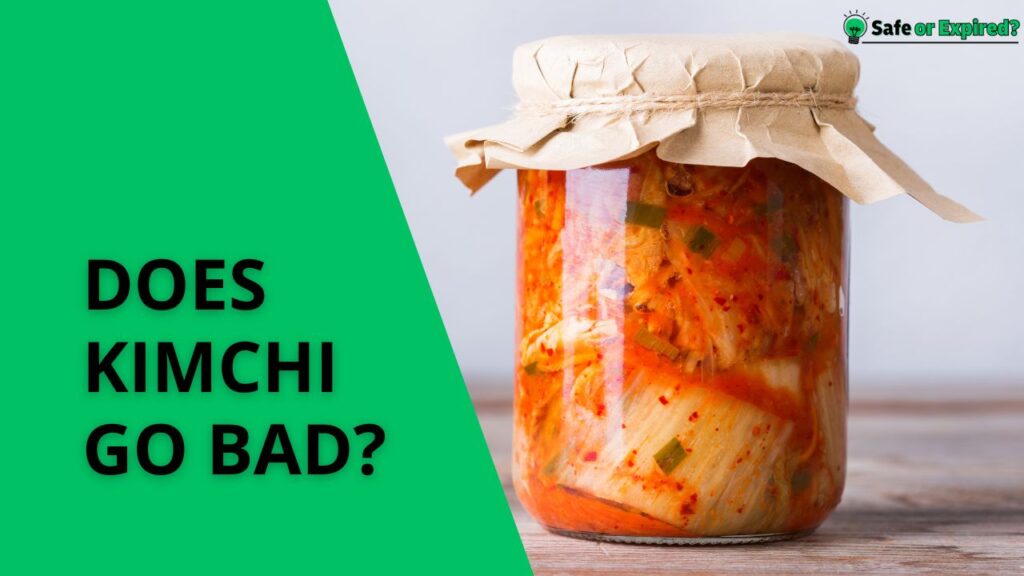
Does Kimchi Go Bad? How to Tell If It’s Still Fermenting or Just Funky
So, you opened your fridge, spotted that jar of kimchi you forgot existed, and now you’re wondering:
“Can this spicy science experiment still be trusted?”
You’re not alone.
Kimchi is one of those mysterious foods that seems immortal… until it suddenly isn’t.
And because it’s fermented, the line between “deliciously tangy” and “absolutely not” isn’t always obvious.
Let’s break down when kimchi goes bad, how long it really lasts, and what to do when it starts acting suspicious.
Does Kimchi Go Bad?
Yes, kimchi can go bad over time. It’s fermented, so it lasts longer than most foods, but signs of spoilage include mold, foul odor, sliminess, or leaking jars. Store-bought kimchi lasts months in the fridge; homemade versions typically last 1- 3 months when stored properly.
But not in the “oops-I-ate-moldy-bread” kind of way. There’s a fine line between beautifully sour and biologically alarming.
Unlike milk or meat, kimchi doesn’t follow a strict “bad after X days” timeline. Its lifespan depends on how it’s stored, whether it’s homemade or store-bought, and how funky you like your funk.
So before you toss your jar in fear (or dive in too soon), let’s break it down.
How Long Does Kimchi Last?
Kimchi isn’t immortal, but it has impressive staying power, especially when refrigerated.
Here’s a general timeline:
| Kimchi Type | Storage | How Long It Lasts |
| Store-Bought (Unopened) | Pantry (cool/dark) | Up to 1 month past “best by” |
| Fridge | 6–12 months | |
| Store-Bought (Opened) | Fridge | 3–6 months |
| Homemade Kimchi | Fridge | 1–3 months (sometimes longer) |
| Any Kimchi (Room Temp) | Countertop | 1 week max (ferments fast) |
| Frozen Kimchi | Freezer | 6–9 months (texture may suffer) |
According to food safety experts from Colorado State University and Food Safety Guidelines, fermented foods like kimchi remain safe for a long time if kept cold and sealed.
But remember, “safe” doesn’t always mean “tasty.”
Even safe kimchi can eventually taste like spicy compost.
Similar idea with fermented sauces, see does hot sauce go bad for timelines and pH tips.
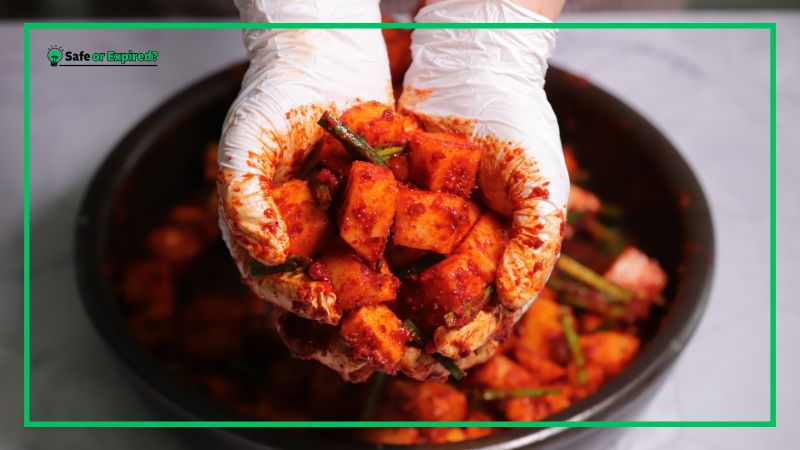
Signs Your Kimchi Has Gone Bad
Kimchi is known for being bold, fizzy, and funky but it’s still possible for it to go from probiotic princess to microbiotic mess.
Here’s how to know if it crossed the line:
1. Mold on the surface
- White, fuzzy, or dark spots floating on top?
- Spoiler alert: that’s spoilage, not seasoning.
🚫 Toss it. Don’t just scoop the top. Mold can spread deeper than you think.
2. Slimy texture
Kimchi should be juicy and crisp, not slippery or gooey. Slime is a sign of harmful bacteria, not healthy fermentation.
3. Strong ammonia or rotting smell
Kimchi naturally smells… assertive. But if it smells like a locker room wrapped in rotten eggs it’s time to let it go.
4. Color changes
While some color fading is natural, darkened cabbage, strange hues, or discolored brine could indicate degradation or contamination.
5. Leaky or bulging jars
Excess gas build-up (from over-fermentation or spoilage) can cause jars to swell or leak.
If your kimchi hisses at you, that’s not sass that’s pressure.
Kimchi Spoilage vs Normal Fermentation Table
| Symptom | Normal Fermentation | Spoilage Warning Sign |
| Smell | Strong, sour, garlicky, fermented | Ammonia, rotten eggs, or sewage-like odor |
| Texture | Crunchy or slightly softened over time | Slimy, mushy, or sticky |
| Color | Slight fading of veggies or red chili mix | Brown, gray, or black spots; discolored brine |
| Gas buildup | Small bubbles or mild fizzing when opened | Jar bulging, hissing, leaking brine when unopened |
| Taste | Tangy, sour, spicy — changes with age | Extremely bitter, harsh, or sharp chemical flavor |
| Surface mold | None | White, green, or black fuzzy patches |
Noticing off-odors or texture changes? Review common spoilage signs to be sure.
Does Kimchi Need to Be Refrigerated?
Yes.
Unless you’re living in a mountain cave with naturally cool temps, kimchi belongs in the fridge after opening.
Period.
Why?
- Cold slows fermentation, which keeps the flavor stable
- Prevents overgrowth of bad bacteria
- Preserves texture warm cabbage = soggy sadness
📦 Even unopened jars from the store last longer in the fridge and taste better too.
Can You Eat Expired Kimchi?
It depends on what you mean by “expired.”
- “Best by” ≠ bad; Kimchi often tastes better a few weeks past its best-by date.
- If refrigerated, unopened, and still smells/tastes fine? You’re golden.
- If moldy, slimy, or smells like doom? Toss it, no regrets.
Can it make you sick? Possibly!
Especially if it was left out too long or shows signs of contamination.
Most store-bought and well-fermented kimchi is safe for long periods, but bad storage = bad microbes.
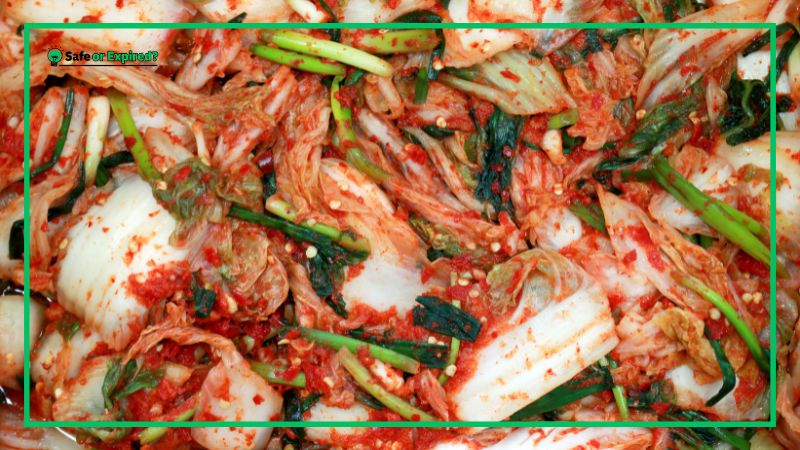
How to Store Kimchi for Maximum Shelf Life
Storing kimchi isn’t rocket science but it does require more care than tossing a jar in the fridge and hoping for the best. Here’s how to keep your kimchi tasting bold without letting it go biologically rogue.
Use Airtight Containers
Oxygen is kimchi’s worst enemy. Use glass jars or high-quality plastic containers with airtight lids. Avoid metal because the acidic brine can react and ruin both the container and the flavor.
Keep It Fully Submerged
Kimchi should stay under the brine at all times. Exposed cabbage = dried-out, funky-tasting, or mold-prone cabbage. If the brine level is low, you can top it off with a little salted water.
Always Use Clean Utensils
Double-dipping with your fork or using your fingers is a quick way to introduce bacteria and ruin the batch. Use clean, dry utensils every time you dig in.
Store In The Fridge, Not The Counter
Room temperature speeds up fermentation and increases spoilage risk. If you want that slow, controlled funk, refrigeration is key.
Can You Freeze Kimchi?
Yes, but only if you’re okay with changes in texture. Freezing can make the cabbage softer and less crunchy, but the flavor and safety hold up well. Ideal for tossing into soups or stews.
Want to keep it fresher for longer? Use these food storage & preservation techniques.
Kimchi Safety Questions Answered by Food Experts
| Question | Science-Backed Answer |
| Can kimchi grow botulism? | Very rarely. Properly fermented kimchi (pH < 4.6) is too acidic for botulism. Only risky if sealed improperly. |
| Does heating kill probiotics in kimchi? | Yes. Cooking kimchi above 115°F kills most probiotics, though nutrients and flavor remain. |
| Can I eat kimchi if the lid was left open overnight? | If it smells fine and has been refrigerated, it’s usually safe but flavor may change. |
| How acidic should kimchi be to be safe? | Safe pH is below 4.6, as confirmed by USDA and university fermentation studies. |
| Is mold on kimchi ever okay? | No. Unlike some cheeses, surface mold on fermented foods is not considered safe. |
Learn why acidic, fermented foods keep longer in our food shelf-life guide.
Is Kimchi That Tastes Sour Still Safe?
Kimchi is supposed to taste sour, that’s the result of natural lactic acid fermentation. But there’s a difference between “deliciously tangy” and “fermented beyond recognition.”
When sour is normal:
- Sharp, tangy bite that balances with salt and chili
- Increases gradually over weeks in the fridge
- Still smells like fermented veggies, not rot
When sour = spoiled:
- Extreme, vinegary burn that overwhelms everything
- Backed by a putrid or ammonia-like smell
- Accompanied by sliminess or color changes
Trust your taste buds. If your kimchi makes you flinch, it’s probably gone too far.
Keep in mind that flavor evolves even if it’s still safe. The longer it sits, the funkier it gets.
So, does kimchi go bad?
Yes, eventually. But it’s surprisingly resilient when stored properly.
Here’s your quick kimchi decision checklist:
- Smells strong but still like food? Keep.
- Slightly more sour than last time? Probably still fine.
- Mold, slime, ammonia, or bulging lid? Toss it.
When in doubt, throw it out.
But if it’s just a little extra funky and you like the kick? You’ve probably just met your favorite batch yet.
For easy wins across the kitchen, check best food storage tips.
FAQ
How Do I Know If Kimchi Has Gone Bad?
Watch for mold, a slimy texture, strong ammonia smells, or jars that are bulging or leaking. Kimchi should be tangy, not terrifying.
Can You Eat Kimchi Past the Expiration Date?
Yes, if it’s been refrigerated and shows no signs of spoilage, kimchi can be safe well past its best-by date. Just expect a more sour and intense flavor.
Do You Have to Refrigerate Kimchi After Opening?
Absolutely. Kimchi continues to ferment at room temperature, which can lead to spoilage, gas buildup, and off flavors. Keep it cold to slow the process.
Can Bad Kimchi Make You Sick?
It’s rare, but yes if contaminated with mold or bacteria, bad kimchi can cause stomach issues or foodborne illness. When in doubt, don’t eat it.
Is It Okay If My Kimchi Is Really Sour?
Yes, to a point. Sourness is a natural result of fermentation. But if the flavor is harsh, unpleasant, or paired with other warning signs like slime or odor, it’s time to let it go.
Conclusion: So, Does Kimchi Go Bad?
Yes, even fermented foods like kimchi have their limits.
But the good news?
Kimchi is built to last. When stored properly, it can stay safe and tasty for months.
It will get more sour over time, but that’s not necessarily a bad thing unless you’re dealing with mold, slime, or a smell that clears the room.
Refrigerate it, keep it sealed, and use clean utensils, and your kimchi will reward you with flavor, crunch, and probiotic power.
If it looks, smells, or feels wrong trust your instincts and toss it.
Does Kimchi Go Bad, Does Kimchi Go Bad, Does Kimchi Go Bad, Does Kimchi Go Bad, Does Kimchi Go Bad, Does Kimchi Go Bad, Does Kimchi Go Bad, Does Kimchi Go Bad, Does Kimchi Go Bad, Does Kimchi Go Bad, Does Kimchi Go Bad, Does Kimchi Go Bad Does Kimchi Go Bad, Does Kimchi Go Bad

