
You open the freezer, spot a half-eaten pint of cookie dough ice cream, and pause.
You don’t remember when you bought it. You’re not even sure what season it was.
But now you’re wondering: Can ice cream expire or actually go bad?
Or is it one of those magical foods that survives anything… like Twinkies and your childhood crush?
Frozen doesn’t mean forever.
This guide covers how long ice cream lasts, how to tell if it’s spoiled, and what happens if you ignore the signs.
Whether you’re into store-bought, homemade, or dairy-free pints, this article will help you decide whether to dive in or say goodbye.
Does Ice Cream Expire?
Yes, ice cream can expire, even in the freezer. Over time, its texture, flavor, and safety can change due to freezer burn, air exposure, or contamination. Unopened ice cream can last up to 2–3 months past its best-by date if stored properly, but once opened, it’s best used within 1–2 months.
While freezing slows down bacterial growth, it doesn’t stop it forever. Ice cream is made with milk, cream, eggs, and sugar, all of which can degrade in quality and safety over time. And if you’ve opened that pint (or half gallon), you’ve invited in air, moisture, and the occasional spoonful of saliva.
Yum.
Manufacturers print a “best by” date on containers to help you enjoy the ice cream at peak flavor and texture.
For a quick reference, this Blue Bell expiration / best-by location guide shows exactly where to look.
That doesn’t mean it turns into a biohazard the day after… but the countdown to freezer funk starts ticking once that lid comes off.
Not sure about ‘best-by’ vs ‘sell-by’? Check our expiration label guide.
How Long Does Ice Cream Last?
Shelf life depends on whether it’s opened, unopened, or homemade, and how well you’ve stored it (spoiler alert: not in the freezer door next to the frozen peas). Check out the USDA Foodkeeper App
Here’s a breakdown:
| Type of Ice Cream | Unopened Shelf Life | After Opening | Storage Notes |
| Store-bought (unopened) | Best within 2–3 months after best-by date | N/A | Keep sealed and frozen at 0°F (-18°C) or below |
| Store-bought (opened) | 1–2 months | Tightly reseal; avoid freezer door and fluctuating temps | |
| Homemade ice cream | N/A | 1–2 weeks | No preservatives = shorter life. Use airtight containers |
| Vegan or dairy-free | 2–3 months (unopened) | 1–2 months (opened) | Same storage rules apply — flavorings can go off quickly |
Pro Tip: Always write the open date on the lid. Time flies when you’re ignoring that pistachio gelato in the back of the freezer.
Signs Your Ice Cream Has Gone Bad
How can you tell if your ice cream’s time is up? Look (and sniff) before you scoop.
Here’s what to watch out for:
- Icy crystals all over the surface or around the lid? That’s freezer burn. Not dangerous, but it means the texture’s gone downhill fast.
- Texture changes like gooey, gummy, or gritty scoops; are a red flag.
- Discoloration or weird streaks (especially in vanilla or lighter flavors)? Could be oxidation or spoilage.
- Strange smells, sour, plasticky, or just “off”? That’s your cue to back away.
- Taste test gone wrong if it tastes stale, bitter, or like your freezer smells… you’ve got your answer.
- Unsure about smell or texture? Review common spoilage signs.
Can You Eat Expired Ice Cream?
Here’s the scoop: expired doesn’t always mean unsafe, but it rarely means enjoyable.
If your ice cream is unopened and has been properly stored, it’s usually fine to eat for a couple months past its best-by date though texture and flavor might suffer. The real issue comes when:
- The ice cream was left out and melted, then refrozen
- It’s covered in ice crystals and tastes like sponge
- It smells or looks suspicious, or was stored next to something smelly (like leftover fish tacos)
Eating expired ice cream may lead to:
- Mild stomach upset
- Major food regret
- Worst-case: foodborne illness, especially if it was melted/refrozen (Listeria loves warm dairy)
So yes, you can eat expired ice cream… but should you? Only if you’re cool with stale, spongey sadness and a gamble on gut health.
Interested in dairy science? Here’s why lactose-free milk lasts longer (processing matters)
What Happens If You Eat Bad Ice Cream?
Sometimes you just want that late-night scoop. But if your ice cream’s turned on you, your gut might notice.
Here’s what could go wrong:
- Mild cases: A little stale flavor and icy texture. Nothing dangerous — just disappointing.
- Moderate cases: Stomach cramps, gas, or nausea from spoiled dairy or off flavorings.
- Severe cases: If it’s been melted and refrozen, harmful bacteria like Listeria monocytogenes may have moved in. This can cause serious foodborne illness, especially risky for kids, pregnant people, or anyone with a weakened immune system.
When in doubt? Toss it out. Ice cream should bring joy… not ER visits.
6. Why Freezer Burn Isn’t Always a Dealbreaker
You open the tub and ughh.. a layer of frosty crystals greets you.
Don’t panic.
That’s just freezer burn.
What is it?
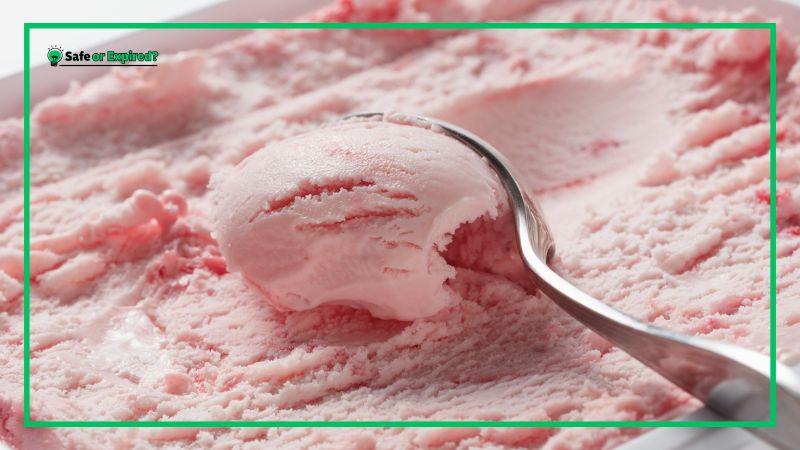
Freezer burn happens when moisture from the ice cream evaporates and refreezes on the surface. It’s not dangerous, just a sign of dehydration and air exposure.
Is it still safe to eat?
Yes, but the taste and texture will suffer. Expect dry, chalky scoops and muted flavors. If you’re desperate, scrape off the frosty layer and eat the fresher ice cream underneath.
How to prevent it:
- Reseal tightly after each scoop.
- Press wax paper or plastic wrap onto the surface before replacing the lid.
- Store containers in the back of the freezer, not the door
7. Can Melted and Refrozen Ice Cream Make You Sick?
Short answer: Yes, it can.
When ice cream melts, it enters the “danger zone” — between 40°F and 140°F — where bacteria grow rapidly. If you refreeze that melty mess, any bacteria that formed won’t be killed, just paused. That means you could be scooping up a spoonful of Listeria or other foodborne pathogens later.
If it melted only slightly and was kept cold (like during a short grocery trip), you’re likely safe. But if it melted completely into dairy soup? Do yourself a favor and toss it.
8. How to Store Ice Cream So It Stays Delicious (Expanded)
Storing ice cream isn’t just about tossing it into the freezer and hoping for the best. Like a moody diva, ice cream needs consistency, cold, and care to maintain its luscious personality. Here’s how to store it properly whether it’s store-bought, homemade, or half-melted from your last late-night fridge raid.
1. Keep It Cold and Steady
Ice cream likes it cold, really cold. Your freezer should be at 0°F (-18°C) or lower. Fluctuating temperatures (like from constant door opening) allow the surface to soften and refreeze, causing ice crystals and texture loss. Use these food storage techniques to reduce ice crystals and flavor loss.
2. Avoid the Freezer Door
The door is the warmest part of your freezer and the most unstable. Every time you open it, your ice cream gets a burst of warm air. Instead, stash your pints in the very back or lower drawer where temps are most stable.

3. Reseal It Tightly
Air is the enemy of good ice cream. After scooping, press a sheet of plastic wrap or wax paper directly on the surface before sealing the lid. This minimizes air exposure and prevents freezer burn.
4. Use Airtight, Opaque Containers
Homemade or transferred ice cream should go in containers that are airtight and preferably opaque. Clear containers may allow light in, which can impact flavor over time. Bonus points if your container is flat and shallow, it freezes more evenly.
5. Avoid Temperature Abuse
Never let ice cream sit out for more than 10–15 minutes. If it melts significantly, you’re entering bacterial danger territory. Once melted, don’t refreeze unless you want to risk spoilage (and a weird slushy texture).
6. Label Homemade Ice Cream
If you’re churning your own, label containers with the made-on date and use it within 1–2 weeks for peak freshness. Homemade versions don’t have preservatives, so they spoil faster.
Ice Cream Storage Best Practices Table
| Storage Tip | Why It Matters | Pro Tip |
| Store at 0°F or below | Prevents melting and bacterial growth | Use a freezer thermometer to monitor temp |
| Avoid the freezer door | Door areas warm up every time it opens | Store in back corners or lower freezer shelves |
| Reseal tightly | Reduces air exposure and freezer burn | Press wax paper onto the surface before sealing |
| Use airtight containers | Keeps out odors, moisture, and fluctuating air | Choose shallow, flat containers for better freeze |
| Limit time at room temperature | Prevents spoilage and refreezing issues | Serve and immediately return to freezer |
| Don’t refreeze melted ice cream | Prevents texture loss and food safety risks | If it melted into soup, toss it out |
| Label homemade batches | Homemade lacks preservatives — spoils faster | Use within 1–2 weeks for best quality |
FAQs
1. How Long Does Ice Cream Last in the Freezer?
Unopened store-bought ice cream lasts up to 2–3 months past its best-by date if stored at 0°F or below. Opened ice cream should be eaten within 1–2 months for best quality.
2. Can Expired Ice Cream Make You Sick?
Yes, especially if it was melted and refrozen. Spoiled dairy can carry harmful bacteria like Listeria, which causes foodborne illness. If the texture, smell, or color seems off, toss it.
3. Is Freezer-Burned Ice Cream Safe to Eat?
Freezer burn isn’t dangerous, just disappointing. It causes dry texture and muted flavor, but it won’t make you sick. You can scrape off the top layer and enjoy the rest if it’s still within a safe window.
4. How Can You Tell If Ice Cream Has Gone Bad?
Watch for icy crystals, sour smells, grainy or gooey texture, and odd discoloration. These are all signs your ice cream has seen better (and colder) days.
5. Can You Refreeze Ice Cream After It Melts?
Technically, yes.. but it’s not recommended. Refreezing changes the texture and can invite bacterial growth if it melted too much. When in doubt, throw it out. See where frozen desserts fit in our food shelf-life guide.
Conclusion: Expired Ice Cream… Chill or Chuck?
So, does ice cream expire? Yep, and while it might not explode like sour milk or wilt like spinach, it can definitely turn from creamy dream to icy disappointment.
The good news? If it’s stored right and hasn’t melted, you’re usually safe even a little past the date. The bad news? If it smells funky, looks frosty, or tastes like regret, it’s not worth the stomach ache.
Remember:
- Unopened pints: Best within 2–3 months past the date
- Opened containers: Use within 1–2 months
- Homemade: 1–2 weeks max
When in doubt, listen to your nose, trust your gut, and don’t play ice cream roulette. There are plenty more pints in the freezer aisle.
does ice cream expire, does ice cream expire does ice cream expire does ice cream expire does ice cream expire does ice cream expire does ice cream expire does ice cream expire does ice cream expire does ice cream expire does ice cream expire does ice cream expire does ice cream expire does ice cream expire does ice cream expire does ice cream expire does ice cream expire does ice cream expire
