

Strawberries: sweet, juicy, photogenic and gone faster than your weekend plans.
If you’ve ever found yourself staring down a moldy berry wondering how long do strawberries last, you’re not alone.
These little red divas can spoil in the blink of an eye if you don’t treat them right.
But don’t worry I’ve got the inside scoop on how to keep your berries fresher, longer, and fuzz-free.
How Long Do Strawberries Last?
Strawberries last 1–2 days at room temperature, 3–7 days in the fridge, and up to 12 months in the freezer if properly stored. Read Food Storage and Preservation Techniques that will make your life easy.
How Long Do Strawberries Last in the Fridge?
Strawberries may be sweet, but they don’t stick around long. If stored properly in the fridge.. unwashed, dry, and in a breathable container. Fresh strawberries typically last 3 to 7 days.
Check out How 7 Food Authorities Protect the foods we eat.
That’s a generous window, considering these juicy gems are about 90% water and bruise if you so much as look at them wrong.
They do best when stored in the crisper drawer, ideally in their original container or something that allows a bit of airflow. Just don’t wash them before storing.. that’s like inviting mold over for a dinner party.
Learn the difference between Best-By and Expiration Dates.
What Affects Strawberry Shelf Life?
Several things can make or break how long your strawberries last. And spoiler alert: most of them come down to how you treat them post-purchase.
| Factor | How It Affects Shelf Life |
| Moisture | Triggers mold growth and decay faster |
| Bruising | Damaged berries spoil quicker and spread decay |
| Temperature | Warmer temps speed up ripening and spoilage |
| Airflow | Poor ventilation traps moisture, speeding mold |
| Cross-contact | Contact with moldy or overripe berries spreads spoilage |
Just like your mood on a Monday morning, strawberries are super sensitive. A bit too much moisture, and they’re out. A little bump in the box, and it’s downhill from there.
Read more on factors affecting food spoilage.
How to Store Strawberries to Keep Them Fresh
To make your strawberries last longer than your willpower, you’ll need a little prep and the right tools. Whether you’re a meal-prepper or a casual berry snacker, here’s how to store them for max freshness.
Storage Options Breakdown
| Storage Method | Shelf Life | Best For |
| Unwashed, in fridge | 3–7 days | Everyday storage |
| Vinegar wash method | 5–7 days | Fighting early mold |
| Paper towel method | 4–6 days | Absorbing extra moisture |
| Airtight container | 2–4 days | Worst option (traps humidity) |
Basic Method (No-Wash Rule)
- Inspect & remove any soft or moldy berries.
- Keep berries unwashed and dry.
- Store in their original packaging or a breathable container.
- Line the bottom with paper towels to soak up moisture.
- Refrigerate in the crisper drawer.
This method is best for general use and balances convenience with effectiveness.
The key? Keep moisture out, airflow in.
Vinegar Bath Method (Bonus Protection)
- Mix 1 part white vinegar to 3 parts water.
- Soak berries for 5 minutes.
- Rinse gently and dry completely (this part matters).
- Store as above.
This kills surface mold spores and bacteria, helping your berries survive the week (or at least not die trying). Many swear by this hack and it’s even backed by food safety experts.
Quick Comparison
| Method | Pros | Cons |
| Unwashed storage | Easy, low-maintenance | Risk of surface mold |
| Vinegar bath | Longer shelf life, mold-resistant | Time-consuming, must dry thoroughly |
| Paper towel layering | Great moisture control | Requires container space |
| Airtight containers | Keeps fridge smells out | Can trap moisture and spoil faster |
Do Strawberries Last Longer at Room Temperature?
Short answer: not really.
While room-temp berries might be ideal for flavor, they’re also sitting ducks for mold. Strawberries stored on the counter typically last just 1–2 days.
Great if you plan to eat them immediately, but risky if you forget they’re there.
Room temp is best avoided unless:
- You plan to eat them within hours.
- You hate cold fruit.
- You enjoy surprises (like mold colonies).
For maximum shelf life, stick to the fridge. You’ll trade a little flavor for a lot of freshness.
Can You Freeze Strawberries for Later Use?
Absolutely. Freezing strawberries is one of the best ways to preserve them long-term. When done right, frozen strawberries can last up to 10–12 months without losing their flavor (though the texture will soften).
Here’s our guide on Storing Raw Food
How to Freeze Strawberries Like a Pro
- Rinse and dry thoroughly.
- Hull the strawberries (remove the green tops).
- Spread them in a single layer on a baking sheet.
- Freeze until solid, then transfer to freezer-safe bags or containers.
- Label with the date.
Pro Tip: Add a bit of sugar or simple syrup if you’re planning to use them for desserts or smoothies. It helps preserve flavor and color.
| Storage Format | Shelf Life | Best Use After Freezing |
| Whole, raw (no sugar) | 8–10 months | Smoothies, baking |
| Whole or sliced w/ sugar | 10–12 months | Desserts, sauces |
| Pre-puréed | 6–8 months | Yogurt, sauces, jams |
Just remember: thawed strawberries are best enjoyed in blended or cooked dishes, not eaten raw, unless you’re into soft berries with personality.
Here are some other fruits that I’ve covered in separate posts that might be of interest to you;

1. How Long Do Coconuts Last?

2. How Long Do Clementines Last?

3. How Long Can Berries Sit Out?

4. How Long Do Limes Last?

5. How Long Does Cantaloupe Last?

6. Do Dates Go Bad?
How Long Do Cut or Washed Strawberries Last?
Once you wash or slice strawberries, you put their shelf life on a timer. Cut or washed strawberries last only 1–3 days in the fridge, even with proper storage.
The key to preserving them is dryness and low oxygen exposure. Use an airtight container with a paper towel to absorb moisture, and eat them quickly.. they won’t wait around.
| Storage Status | Shelf Life |
| Whole & unwashed | 3–7 days |
| Washed & whole | 2–4 days |
| Cut or sliced | 1–3 days |
How to Tell If Strawberries Have Gone Bad?
Strawberries don’t come with an expiration date stamped on them, so knowing when they’ve gone bad is all about using your senses.
The tricky part? Spoilage doesn’t always show up all at once. Sometimes it starts quietly, then snowballs fast. Read details on 9 Common Signs of Spoilage.
Below are the most common warning signs, explained in detail so you know exactly what you’re dealing with no guesswork required.
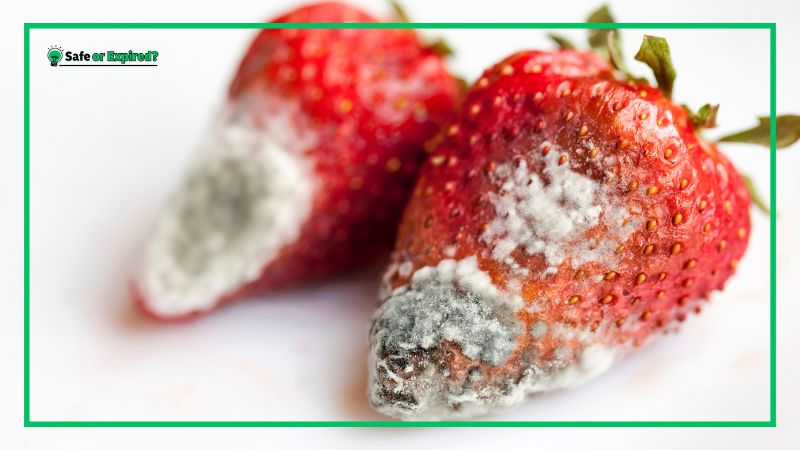
Mold (The Biggest Red Flag)
Mold is the clearest sign your strawberries are no longer safe to eat. It usually appears as white, gray, or green fuzzy patches, often starting near the stem or on berries touching the bottom of the container.
What many people don’t realize is that mold on soft fruits spreads below the surface, even if you only see it in one spot. Cutting off the moldy area doesn’t make the rest safe, the spores can already be inside the fruit.
If you see mold on any strawberry, remove it immediately. If several berries are moldy, toss the entire container.
Slimy or Sticky Texture
Fresh strawberries should feel dry and slightly firm on the outside. If they feel slimy, sticky, or coated in a slick film, bacteria have already started breaking the fruit down.
This slime is often caused by excess moisture combined with warmth, a perfect environment for spoilage. Even if there’s no visible mold yet, sliminess means the strawberries are past their safe window.
Rule of thumb: If the texture makes you hesitate, that’s your answer.
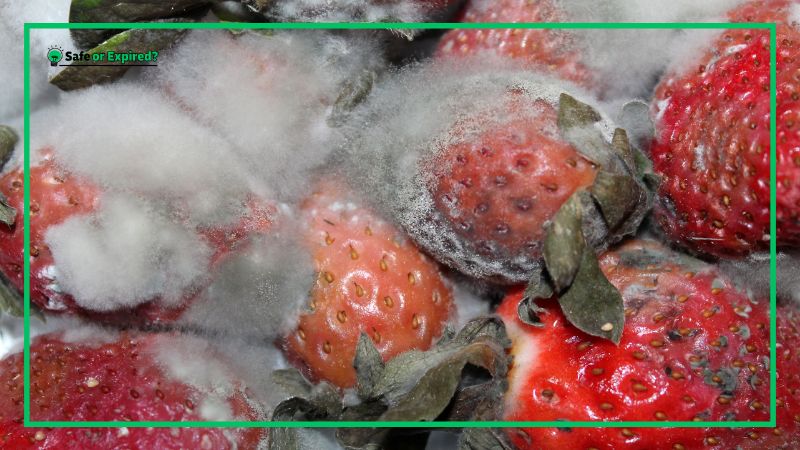
Mushy, Wrinkled, or Collapsing Flesh
Not all softness is bad — strawberries naturally soften as they age. But there’s a big difference between ripe and structurally failing.
Bad signs include:
- Strawberries collapsing when picked up
- Deep wrinkles or shriveled skin
- Flesh that leaks juice under gentle pressure
These changes mean the cell walls have broken down and the fruit is actively decomposing.
Sour, Fermented, or “Alcohol-Like” Smell
Fresh strawberries smell sweet and lightly floral. When they go bad, that aroma changes fast.
A sour, vinegar-like, or wine-ish smell means fermentation has started. This happens when natural sugars break down and microbes take over.
If your strawberries smell like:
- Sour candy
- Old wine
- Something “yeasty”
They’re no longer safe to eat.. even if they still look okay.
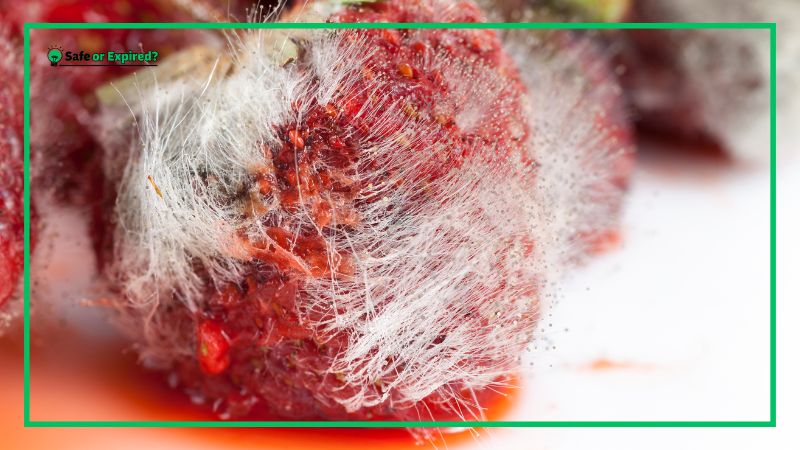
Dark Spots, Leaking Juice, or Discoloration
Watch closely for:
- Dark brown or black wet spots
- Juice pooling at the bottom of the container
- Dull or uneven coloring
These are signs of internal breakdown, where the fruit is rotting from the inside out. Leaking juice also speeds up spoilage in neighboring berries, so one bad strawberry can take the whole group down with it.
Taste Test (Only If Everything Else Seems Fine)
If a strawberry looks good, smells fine, and feels normal, but you’re still unsure, a tiny taste can help only as a last step.
A bad strawberry will taste:
- Sour
- Bitter
- Fermented
- “Off” in a way that’s immediately noticeable
If it doesn’t taste right, stop immediately and discard it.
Quick Comparison: Fresh vs. Spoiled Strawberries
| Feature | Fresh Strawberries | Spoiled Strawberries |
| Smell | Sweet, fruity | Sour, fermented, funky |
| Texture | Firm, dry | Slimy, mushy, sticky |
| Appearance | Bright red, glossy | Dull, moldy, leaking |
| Surface | Clean, intact | Fuzzy mold or wet spots |
| Juice | Contained | Pooling or oozing |
Strawberries are a soft fruit, which means spoilage spreads quickly and invisibly. If something feels questionable, it probably is.
When it comes to strawberries: Trust your senses, not your optimism.
Tips to Make Strawberries Last Longer
Strawberries are delicious, but they’re also the divas of the produce world, delicate, fussy, and quick to quit on you if you’re not careful.
Luckily, with a few smart habits, you can turn your fridge into a spa retreat for strawberries and squeeze out several extra days of freshness.
1. Don’t Wash Them Until You’re Ready to Eat
Washing strawberries too early is the number one way to shorten their lifespan. Water on the surface creates the perfect moist environment for mold and bacteria to flourish.
Instead:
- Keep them completely dry in storage.
- Rinse only what you plan to eat that day.
2. Use the Vinegar Rinse Trick (for Mold Prevention)
Want to go the extra mile? Soak your strawberries in a vinegar-water solution (1 part vinegar to 3 parts water) for 5 minutes right after bringing them home.
This helps kill off mold spores and bacteria that naturally cling to fruit. After soaking:
- Rinse with clean water
- Dry thoroughly (really dry!)
- Store as usual
This method is especially helpful if your strawberries came from a farmers market or weren’t refrigerated when purchased.
3. Store in a Paper Towel-Lined Container
Moisture equals to mold. One of the simplest and most effective hacks is to place a layer of paper towels at the bottom of the container to absorb excess humidity.
Bonus tip: If using a lidded container, keep the lid slightly ajar to allow air circulation and reduce trapped moisture.
4. Use a Breathable Container
The plastic clamshell your berries come in? It’s not just packaging, it’s actually designed to help strawberries breathe and stay dry.
If transferring to another container:
- Choose something with small vents or punch holes in the lid.
- Avoid airtight containers as they lock in moisture and create a steamy mess.
5. Separate the Weakest Links
As soon as you get home, go through the container and remove any mushy, bruised, or moldy berries. One bad berry can spoil the rest and fast.
Make this a habit every couple of days to catch early signs of spoilage before it spreads.
6. Keep Strawberries in the Coldest Part of the Fridge
The crisper drawer isn’t just a suggestion, it’s the ideal spot. It offers more stable humidity and lower temperatures than the fridge door or top shelf.
Pro Tip: Don’t store berries in the fridge door. It’s too warm and fluctuates every time it opens.
7. Freeze What You Won’t Eat in Time
If you notice your strawberries are on the edge not spoiled yet, but definitely softening, freeze them.
Freezing halts the spoilage process and gives you months of storage. Just wash, dry, hull, and freeze on a tray before transferring to a freezer bag.
Frozen strawberries are perfect for:
- Smoothies
- Yogurt bowls
- Baked goods
- Jam
Quick Reference: Strawberry Freshness Tips
| Tip | Why It Works |
| Don’t wash early | Prevents moisture-related spoilage |
| Vinegar rinse + dry | Kills bacteria and mold spores |
| Paper towel in container | Absorbs moisture and keeps berries dry |
| Use breathable container | Promotes airflow, limits humidity |
| Remove damaged berries | Prevents spoilage from spreading |
| Store in crisper drawer | Cold, stable temperature = longer freshness |
| Freeze soft berries | Stops spoilage and extends use |
With these strategies in your back pocket, you’ll get way more mileage out of every pint — and fewer sad, squishy surprises hiding in the back of your fridge.
Is It Safe to Eat Moldy Strawberries?
In short: Nope.
Even if the mold is only on one part of the berry, it could have already spread. Mold doesn’t just hang out on the surface it sends roots into soft fruits like strawberries.
According to USDA food safety guidelines, moldy soft fruit should be thrown away entirely.
So unless you enjoy a side of spores with your snack, skip it.
Can Strawberries Be Revived After They Start to Spoil?
If your strawberries are slightly soft but not moldy, there’s still hope!
Try this trick:
- Soak them in ice water for about 20 minutes.
- Dry them thoroughly.
- Store them using the dry container + paper towel method.
This doesn’t work miracles, but it can perk up limp berries just enough for one last hurrah — especially if you’re using them in recipes like oatmeal, pancakes, or a quick compote.
FAQ
How Long Do Strawberries Last in the Fridge?
Fresh, whole strawberries typically last 3 to 7 days in the fridge when stored unwashed and dry in a breathable container.
Can You Freeze Strawberries for Later?
Yes! Clean, dry strawberries can be frozen and stored for up to 12 months — perfect for smoothies, jams, or baking.
Do Strawberries Go Bad Faster If Washed?
They do. Washing adds moisture, which speeds up mold growth. Wait to rinse until you’re ready to eat.
How Can I Keep Strawberries Fresh Longer?
Store them unwashed, cold, and in a paper towel-lined container. Bonus points for using a vinegar rinse to kill mold spores early on.
Is It Safe to Eat Strawberries with Mold?
Nope. Mold spreads quickly in soft fruits. If one berry is moldy, toss it — and check the others closely before eating.
Conclusion
Let’s Recap the Berry Basics;
- Fresh strawberries last 3–7 days in the fridge when stored properly
- Moisture, warmth, and bruising speed up spoilage
- Storing unwashed in a paper towel-lined container slows mold
- You can freeze strawberries for up to 12 months
- Mold = immediate toss; sour smell = don’t risk it
Whether you’re stocking up at the farmers market or snagging a supermarket special, strawberries don’t have to be a ticking time bomb.
With these simple tips, you can outsmart spoilage and enjoy every juicy bite without the guilt (or the mold).
how long do strawberries last how long do strawberries last how long do strawberries last how long do strawberries last how long do strawberries last how long do strawberries last how long do strawberries last how long do strawberries last how long do strawberries last how long do strawberries last how long do strawberries last how long do strawberries last how long do strawberries last how long do strawberries last how long do strawberries last how long do strawberries last how long do strawberries last how long do strawberries last how long do strawberries last how long do strawberries last how long do strawberries last how long do strawberries last how long do strawberries last
