

Sauerkraut is the quirky grandparent of the food world: a little sour, full of character, and surprisingly good for your gut. But does that fermented funk mean it never spoils?
Not quite. While sauerkraut has a long shelf life thanks to its fermentation process, it isn’t immortal. It can go bad, especially if you neglect its salty, briny boundaries.
In this guide, we’ll cover how long sauerkraut really lasts, how to store it like a fermentation pro, and, most importantly, when to say goodbye to your beloved cabbage
Do Sauerkraut Go Bad?
Yes, sauerkraut can go bad, especially if it’s not stored properly. Unopened pasteurized kraut can last for years, but once opened, it typically lasts 4–6 months in the fridge if kept sealed and submerged in brine. Watch for signs like mold, foul odor, or slime.
Sauerkraut is just cabbage and salt, but give it time, and magic happens. During fermentation, natural bacteria (like Lactobacillus) produce lactic acid, which preserves the cabbage and gives sauerkraut its signature sour taste.
Thanks to this process, sauerkraut is:
- Low pH (acidic), which wards off harmful bacteria
- Naturally rich in probiotics (if unpasteurized)
- Exceptionally shelf-stable, especially when unopened
That said, once air and contaminants are introduced (think: dirty forks, warm rooms, or forgetting to seal the jar), even the most robust kraut can go south.
Wondering can you eat expired carrots? Read it here.
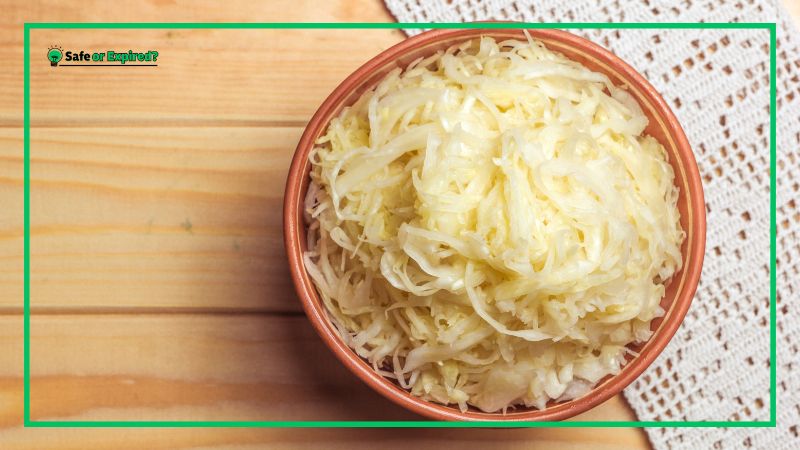
Do Sauerkraut Go Bad? (Short Answer: Yes, Eventually)
Fermentation may slow down spoilage, but it doesn’t prevent it forever. The answer depends on the type of sauerkraut. Here’s a table to help you visualize it better.
| Type of Sauerkraut | Shelf Life (Unopened) | Shelf Life (Opened) |
| Pasteurized (jar/can) | 1–3 years (pantry) | 3–4 weeks (fridge) |
| Unpasteurized (raw) | Refrigerated: 4–6 months+ | 4–6 months (fridge) |
The clock starts ticking once a container is opened, and especially if it’s not sealed tightly or kept cold. Read more on factors affecting food spoilage.
Shelf Life of Sauerkraut: Unopened vs. Opened
Let’s break it down by what’s in your pantry vs. what’s lurking in your fridge.
| Sauerkraut Type | Storage Condition | Estimated Shelf Life | Notes |
| Pasteurized (Unopened) | Pantry (cool, dark) | 1–3 years | Check best-by date on label |
| Unpasteurized (Unopened) | Fridge | 4–6+ months | Keep chilled at all times |
| Pasteurized (Opened) | Fridge | 3–4 weeks | Must be tightly sealed |
| Unpasteurized (Opened) | Fridge | 4–6 months or longer | Keep submerged in brine |
| Frozen (Any Type) | Freezer | 6–12 months | Texture may soften after thawing |
How to Store Sauerkraut (Fridge, Pantry, and Beyond)
Sauerkraut might be the ultimate low-maintenance food, but don’t let its ancient fermentation roots fool you, it still appreciates proper storage.
Where and how you store it can make the difference between months of tangy goodness and a sad science experiment in your fridge.
General Rules:
- Unopened Pasteurized Sauerkraut:
If you’ve got unopened pasteurized sauerkraut, like the kind that comes in cans or glass jars from the grocery shelf, it can safely hang out in your pantry for up to one to three years.
The key is to keep it in a cool, dark place, think cupboard or pantry, away from direct sunlight and temperature swings.
- Opened Pasteurized Sauerkraut
As soon as you open that jar or bag, whether it’s pasteurized or unpasteurized, sauerkraut needs to be stored in the refrigerator.
And not just anywhere in the fridge, ideally, it should be placed on a middle or lower shelf where the temperature stays consistent.
Make sure it’s sealed tightly and kept in a clean container.
- Keep It In a Glass Jar
Glass jars with secure lids are ideal, especially because sauerkraut is acidic and doesn’t play well with metal. A food-safe plastic container works too, as long as it’s not stained or warped.
- Keep Sauerkraut Submerged In Its Brine
One of the biggest mistakes people make is not keeping their sauerkraut submerged in its brine. That salty liquid isn’t just for flavor, it’s a natural preservative that creates an oxygen-free environment where bad bacteria can’t thrive.
As long as your kraut stays under the brine, it can last for months without spoiling. If you notice the liquid getting low, you can top it up with a bit of salt water to keep it covered.
- Keep It Clean
It’s also crucial to keep things clean. Always use a clean fork or utensil to scoop out what you need.
Introducing crumbs, saliva, or food particles can throw off the pH balance and invite unwanted microbial guests to the party.
- Freezing Sauerkraut
If you’re wondering if sauerkraut can survive the freezer- yes, it can, but with a few caveats.
Freezing will extend its shelf life by several months, but it can soften the texture and reduce some of the probiotic benefits, especially in unpasteurized versions.
So, while frozen kraut works great in cooked dishes like stews and sausages, don’t expect the same crunchy bite if you thaw it for a salad.
Here’s everything broken down in table format so it’s easier to understand:
| Storage Method | Best For | Do This | Avoid This |
| Pantry (Unopened) | Pasteurized sauerkraut | Store in cool, dark space | Exposure to heat or sunlight |
| Fridge (Opened) | All types | Seal tightly, keep in brine | Leaving exposed to air |
| Glass Jar (Fridge) | Long-term opened storage | Use clean utensils, reseal tightly | Storing in reactive metal containers |
| Food-safe Plastic | Short-term opened storage | Use if airtight | Using old/stained containers |
| Freezer | Cooked use or long storage | Use freezer bags or airtight jars | Expect softened texture post-thaw |
Read Food Storage and Preservation Techniques that will make your life easy.
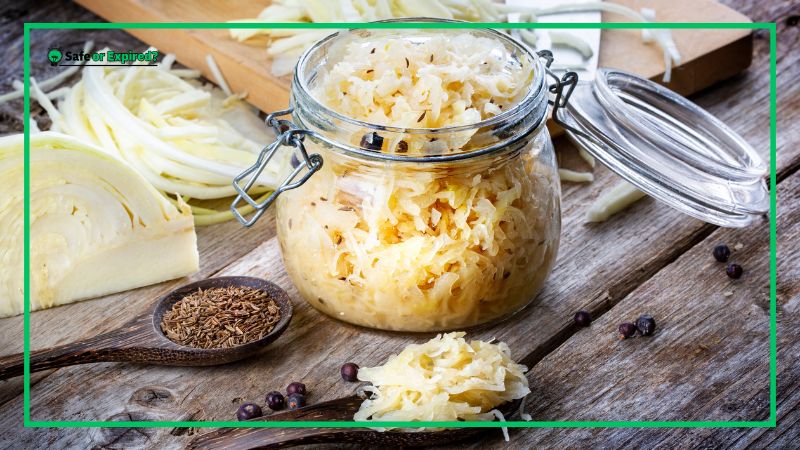
How to Tell If Sauerkraut Has Gone Bad
Even though sauerkraut is fermented, it can still spoil. The key is knowing how to tell the difference between normal fermentation funk and actual food safety red flags. Use these clear checks before you eat it.
Wondering how long do carrots last in the fridge? Read it here.
1. The Smell Is No Longer Just “Sour”
Sauerkraut should smell tangy, acidic, and cabbage-forward. That sharp sour smell is normal. What isn’t normal is an odor that smells rotten, sulfur-like, or similar to spoiled eggs or garbage.
If the smell makes you recoil instead of crave a bratwurst, the sauerkraut has gone bad.
2. Visible Mold Has Appeared
Any green, blue, black, or fuzzy mold on the surface means the entire batch should be discarded. Unlike hard cheeses, sauerkraut is a soft, wet food, so mold spreads below the surface even if you only see it on top. Scraping it off does not make it safe.
A thin white film can sometimes appear during fermentation, but once the kraut is stored for eating, visible mold is a hard stop.
If you see mold, follow USDA guidance on moldy foods: many foods with mold should be discarded, and they advise not to even sniff moldy items.
3. The Texture Has Turned Slimy or Mushy
Fresh sauerkraut should be crisp and crunchy. If it becomes slimy, sticky, or gelatinous, that’s a sign of unwanted bacterial growth. This often happens when the kraut isn’t fully submerged in brine or has been contaminated by dirty utensils.
If the texture feels wrong when stirred, don’t taste it.
4. The Color Looks Off or Unnatural
Sauerkraut naturally dulls slightly over time, but dramatic color changes are not normal. Brown, gray, pink, or bluish hues usually signal oxidation or microbial activity. Healthy sauerkraut stays pale yellow to light gold, even as it ages.
In this case the CDC’s general rule is still the best: when in doubt, throw it out (especially when smell, color, or texture seem unusual).
5. It’s Been Opened Too Long Without Proper Storage
Even well-stored sauerkraut doesn’t last forever. If it has been opened for many months, especially without full brine coverage or consistent refrigeration, spoilage risk increases. When time, smell, and appearance all raise doubts, it’s best to throw it out.
Read details on 9 Common Signs of Spoilage.
| Sign | What It Indicates | Safe to Eat? | Action to Take |
| Rancid or rotten smell | Spoiled due to bacteria | No | Discard immediately |
| Mold (green/blue/fuzzy) | Contamination | No | Discard entire batch |
| Slimy or mushy texture | Breakdown from bacterial growth | No | Do not consume |
| Pink, brown, or gray color | Oxidation or microbial activity | No | Consider spoiled |
| Slight dulling of color | Normal over time | Yes | Still edible if smells okay |
| Tangy, sour smell | Healthy fermentation | Yes | Safe to eat |
FAQs
Does Sauerkraut Go Bad?
Yes, despite being fermented, sauerkraut can go bad, especially if it’s not stored properly or exposed to contaminants. Mold, bad smells, and slimy textures are all red flags.
How Long Does Sauerkraut Last in the Fridge?
Opened, pasteurized sauerkraut lasts around 3–4 weeks in the fridge. Unpasteurized versions can last 4–6 months or longer when kept submerged in brine and stored cold.
Can You Eat Sauerkraut Past Its Best-By Date?
If unopened and stored correctly, pasteurized sauerkraut can often be eaten beyond its best-by date. But always check for signs of spoilage before consuming.
Is It Safe to Freeze Sauerkraut?
Yes, sauerkraut can be frozen, especially if you plan to cook with it. Just know that freezing may reduce its crunch and probiotic content.
What Happens If You Eat Bad Sauerkraut?
You could end up with digestive upset or food poisoning if it’s truly spoiled. When in doubt, toss it out.
Conclusion
Sauerkraut is impressively long-lasting thanks to fermentation, but it isn’t invincible. With proper storage, it can stay fresh for months- sometimes even longer- but poor handling or contamination will shorten its life fast.
Remember:
- Keep sauerkraut refrigerated once opened
- Always keep it fully submerged in brine
- Use clean utensils every time
- Toss it immediately if you see mold, slime, or smell rot
When it comes to fermented foods, trust your senses. If something feels off, your gut is probably right- literally.
Do Sauerkraut Go Bad Do Sauerkraut Go Bad Do Sauerkraut Go Bad Do Sauerkraut Go Bad Do Sauerkraut Go Bad Do Sauerkraut Go Bad Do Sauerkraut Go Bad Do Sauerkraut Go Bad Do Sauerkraut Go Bad Do Sauerkraut Go Bad Do Sauerkraut Go Bad Do Sauerkraut Go Bad Do Sauerkraut Go Bad Do Sauerkraut Go Bad Do Sauerkraut Go Bad
