
Leftover salmon sitting in your fridge, quietly judging you?
Here’s the simple rule: cooked salmon lasts 3–4 days in the refrigerator at or below 40°F.
That comes straight from USDA leftovers guidance and the FDA’s 40°F refrigerator rule.
In this guide, you’ll learn how to cool salmon fast, store it right, reheat it without drying it out, and spot spoilage before it ruins dinner.
We’ll also cover freezing, special cases like smoked and canned salmon, tips for higher-risk groups, and quick recipes to beat the fridge clock.
Safety first, leftovers second..taste and tummy both win.
How Long Does Cooked Salmon Last In The Fridge?
Cooked salmon lasts 3–4 days in the fridge when kept at or below 40°F. Follow the 2-hour rule (1 hour if above 90°F), store in shallow airtight containers, and reheat to 165°F. If it smells sour, feels slimy, or looks dull or sticky, throw it out. Safety first, leftovers second.
How Long Cooked Salmon Lasts in the Fridge (USDA & FDA rules made simple)
Cooked salmon stays good for 3–4 days in the fridge when your fridge is at or below 40°F (4°C). That’s the same leftover window the USDA’s leftovers guidance uses for cooked meats and fish. The FDA also stresses 40°F as the safe refrigerator temperature.
Quick hits:
- Keep it cold (≤40°F). If you don’t know your fridge temp, use a $5 fridge thermometer.
- Store in shallow, airtight containers so it cools fast and doesn’t pick up odors.
- Reheat leftovers to 165°F (yes, even if they “look hot”). See USDA reheat guidance.
- If it smells funky or looks slimy, toss it. Leftovers aren’t a personality test.
- Wondering how long does canned tuna last, read this for shelf life.
From Oven to Fridge: The room-temperature “2-hour rule” explained
Bacteria grow fastest between 40°F–140°F (aka the Danger Zone). That’s why perishable food should sit out no more than 2 hours.. or 1 hour if it’s above 90°F (hello, beach BBQ).
Fast-cool game plan:
- Flake or slice big fillets so steam escapes quickly.
- Spread pieces in shallow containers (about 2 inches deep or less).
- If it’s warm after ~30 minutes, refrigerate anyway. Don’t wait for perfect room temp.
Storage 101: Cooling fast, airtight containers, and labeling that saves the day
Storage is where you win or lose your 3–4 day window.
- Use airtight containers or heavy freezer bags to reduce oxygen and smells.
- Label + date (e.g., “Salmon — Fri 12/05”) so you don’t play “mystery meal.”
- Don’t stack warm containers; leave air gaps so cold air circulates.
- Park on a middle shelf, not the door (door temps swing more—thanks, midnight snackers).
Shelf Life by Scenario (Table)
Different prep = slightly different risk. When handling was iffy (buffets, potlucks), aim for the short end of the range.
| Scenario | Max Fridge Time (≤40°F) | Notes |
|---|---|---|
| Plain cooked salmon | 3–4 days | Cool fast; airtight container. |
| Sauced/high-moisture salmon (creamy sauces, glazes) | 3–4 days | Moisture can soften texture; watch separation. |
| Meal-prepped salmon (with grains/veg) | 3–4 days | Store components separately for best texture. |
| Restaurant leftovers | Up to 3 days | Unknown time at room temp—play it safer. |
| Buffet/potluck leftovers | Up to 3 days | Higher handling risk—discard sooner if unsure. |
Is It Still Good? Spoilage signs to check (Table)
Trust your senses—and when in doubt, bail out.
| Check | Fresh/OK | Spoiled/Nope |
|---|---|---|
| Smell | Clean, mild, ocean-like | Sour, ammonia-like, sharp “off” odor |
| Look | Even color; moist, not wet | Dull/gray patches, shiny slime, mold |
| Texture | Tender; flakes easily | Slimy, sticky, mushy |
| Taste* | Savory, salmon-y | Sour/strange—spit, don’t sit |
| *If sight or smell is off, don’t taste it. Pitch it. |
Unsure after opening the container? Compare with common spoilage signs.
Reheating Leftover Salmon: Safe temps and taste-friendly methods (Table)
Target 165°F in the thickest part. Add a little moisture so it doesn’t dry out like last week’s group chat.
| Method | How-To | Time & Temp | Pros | Cons |
|---|---|---|---|---|
| Oven | Small baking dish; cover loosely; add splash of stock/lemon | 275–300°F for 10–15 min to 165°F | Even heat, moist | Slower |
| Skillet | Low heat, covered; 1 tsp oil/butter | 3–5 min/side to 165°F | Fast, great texture | Easy to overcook |
| Microwave | Cover with damp towel; 50–70% power | 1–2 min in bursts to 165°F | Fastest | Can be uneven/dry |
| Air fryer | Lower temp; foil tent if drying | 300°F for 5–7 min to 165°F | Crisp edges | Can over-dry |
Here’s what my wife thinks of me:
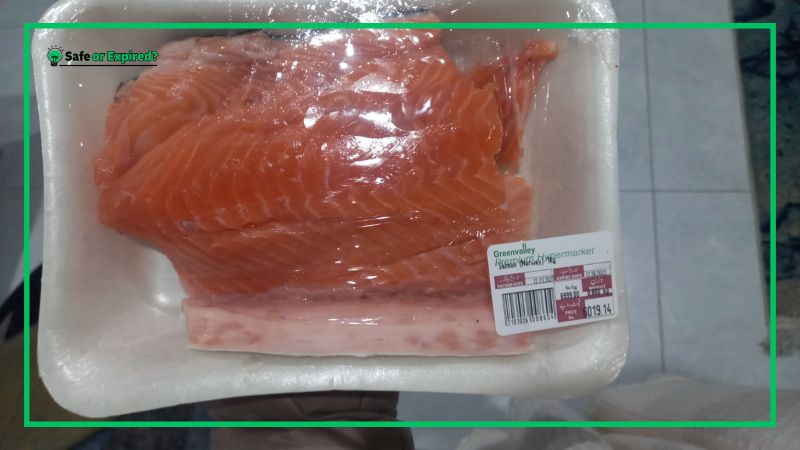
P.S. Norwegian Salmon is quite expensive here in Pakistan, so yeah!!
Freezing Cooked Salmon: How long it lasts, best wrapping, and thawing right
Freezing is your leftover superpower. It puts time on pause, so dinner can happen later without drama. For cooked salmon, aim to enjoy it within 2–3 months for best flavor and texture.
It stays safe longer, but quality slowly drops as ice crystals nibble away at moisture. If you want official ranges by product type, check the USDA/HHS FoodKeeper storage times.. it’s the government’s handy, searchable food-storage playbook.
For shellfish, here’s cooked shrimp fridge life and best-practice storage.
How to freeze cooked salmon like a pro:
- Cool fast first. Don’t trap steam. Spread salmon in a shallow dish and let it stop steaming before you wrap it.
- Double-wrap. First layer: plastic wrap pressed right on the fish to block air. Second layer: a freezer bag or foil. Less air = less freezer burn.
- Use a vacuum sealer when you can. Removing air boosts quality and buys you more time.
- Portion before freezing. Pack single-meal amounts so you only thaw what you need.
- Label and date with a marker (e.g., “Salmon — 12/05 — 2 portions”). Future you will cheer.
- Keep leftovers fresher with these food storage tips (cool quickly, airtight, label).
Safe thawing—no guesswork:
- In the fridge (best): Move to the fridge and let it thaw slowly. This keeps the fish out of the Danger Zone (40°F–140°F).
- Cold water method (fast): Seal in a bag, submerge in cold water, and change the water every 30 minutes. Do not use warm water.
- Microwave (last resort): Use the defrost setting, then eat right away. Microwave thawing nudges food into the Danger Zone, so there’s no “put it back in the fridge for later” after this step. See USDA safe defrosting methods for the official play.
Freezer Storage & Quality Timeline (Table)
| Wrap Type | Best-Quality Window | What It Does Well | Watch Outs |
|---|---|---|---|
| Plastic wrap + freezer bag | 2–3 months | Easy, cheap, reduces air | Press out air; double-bag if thin |
| Heavy-duty foil + freezer bag | 2–3 months | Great barrier to air and odors | Label clearly; foil looks similar in the freezer |
| Vacuum-sealed | 3+ months (quality) | Best air removal; stacks flat | Mark the date—easy to “lose” in there |
| Rigid airtight container | 2–3 months | Protects delicate pieces | Leave minimal headspace to avoid ice |
Special Cases: Smoked, canned, and sous-ide salmon storage times
Not all salmon is the same. Smoke, salt, and packaging change how long it lasts. When in doubt, follow the package label and cross-check with FDA refrigerated food safety basics and the USDA FoodKeeper guide.
Salmon “Special Cases” Storage Guide (Table)
| Product | Unopened Storage | Opened (Fridge ≤40°F) | Freezer (Best Quality) | Notes |
|---|---|---|---|---|
| Hot-smoked salmon (refrigerated pack) | Use-by date (often up to 2 weeks refrigerated) | 5–7 days | 2–3 months | Hot-smoked is fully cooked; keep sealed tight and cold. |
| Cold-smoked salmon (lox, gravlax) | Use-by date (refrigerated) | 5–7 days | 2–3 months | Perishable even though salty; higher Listeria concern for some groups. |
| Canned salmon (shelf-stable) | Best quality 2–5 years (cool, dry place) | 3–4 days (transfer to a clean container) | Not recommended after opening | Check can integrity; see USDA food product dating. |
| Sous-vide cooked, then chilled | N/A | 3–4 days unopened if rapidly chilled and safely handled | 2–3 months | Keep sealed and cold; if seal breaks, use sooner. |
Pro tip: If you are pregnant, older, or immunocompromised, skip ready-to-eat cold-smoked fish unless it’s heated to steaming hot right before serving. See the FDA fish advice for pregnant and breastfeeding people for a super-clear chart.
Food Safety for Kids, Pregnant People, and Older Adults
Some groups face a higher risk from foodborne germs. That includes pregnant people, babies and young kids, older adults, and anyone with a weakened immune system. The steps don’t change much, but the margin for error gets smaller. Keep it simple and strict:
- Use the short end of the storage window: aim for 3 days (not 4) in the fridge.
- Reheat leftovers to 165°F every time. Don’t “taste-test” if smell or look seems off—just discard.
- Skip cold-smoked, ready-to-eat fish unless heated until steaming, due to Listeria risk (a big one during pregnancy). For safe fish choices and serving sizes, use the FDA’s fish advice chart.
- Keep fridge temp ≤40°F and use a thermometer to be sure (see the FDA 40°F guidance). Door shelves run warmer—store high-risk items deeper inside.
- Avoid repeated reheats. Portion once, reheat once, eat once. Leftovers should not ping-pong between hot and cold more than needed.
This is about safety, but it’s also about taste. Salmon shines when it’s handled gently and eaten fresh. Playing it safe helps both your health and your flavor.
Use It Up: Quick meal ideas to beat the fridge clock
Got salmon day 2 or 3? Let’s turn it into fast wins. These ideas take about 10 minutes and keep your leftovers out of the trash.
- Lemon-Dill Salmon Salad: Flake salmon with Greek yogurt, chopped dill, lemon juice, salt, and pepper. Pile on toast or stuff in a pita with crunchy lettuce.
- Salmon Fried Rice: Heat oil, add garlic and leftover rice, then peas and carrots. Stir in soy sauce and sesame oil. Fold in flaked salmon right at the end so it stays tender.
- 10-Minute Salmon Tacos: Warm tortillas. Mix quick slaw (cabbage, lime, pinch of salt). Add salmon, salsa, and a swirl of lime crema.
- Mediterranean Grain Bowl: Quinoa + cucumber + cherry tomatoes + olives + feta + vinaigrette. Salmon crowns the whole thing like a chill little tiara.
- Salmon Melt: Make a salmon salad (yogurt or mayo, celery, mustard). Top bread with the mix and sliced cheddar. Broil till bubbly.
- Citrus Pasta Toss: Warm olive oil with garlic and lemon zest. Toss with pasta, spinach, capers, and salmon flakes. Finish with lemon juice and parsley.
- Salmon Caesar Flatbread: Brush flatbread with olive oil, add salad greens, Caesar dressing, shaved Parmesan, and salmon. Crack pepper on top.
- Herby Omelet or Scramble: Eggs, chives, and salmon make a protein-packed breakfast-for-dinner that uses leftovers fast.
Pro tip: If you’re on day 3 and not ready to eat, freeze it (see above) rather than “see what happens tomorrow.” Tomorrow is how food waste happens.
Quick Reference: Storage time chart and temperature guide (Table)
One table to rule them all. Stick it on the fridge.
| Item | Fridge (≤40°F) | Freezer (Best Quality) | Reheat To | Key Rule |
|---|---|---|---|---|
| Cooked salmon (plain or sauced) | 3–4 days | 2–3 months | 165°F | Keep below 40°F per FDA |
| Restaurant/buffet leftovers | Up to 3 days | 2–3 months | 165°F | Unknown handling—be extra cautious |
| Smoked salmon (opened) | 5–7 days | 2–3 months | As served or heated | Higher salt, still perishable |
| Canned salmon (opened) | 3–4 days | Not recommended after opening | 165°F if reheating | Transfer to clean container |
| Room-temp safety window | ≤2 hours (≤1 hour if >90°F) | — | — | 2-hour rule per USDA |
Also remember the Danger Zone: 40°F–140°F is where bacteria grow fast. Keep food out of that range whenever possible (see USDA’s Danger Zone guide).
Common Mistakes That Make Salmon Spoil Faster (and easy fixes)
Let’s dodge the usual traps. They’re simple to fix, and they make a real difference.
- Letting it linger on the counter. After dinner, the clock is ticking. Use the 2-hour rule (1 hour if it’s blazing hot outside).
- Cooling in deep containers. Thick containers hold heat. Spread salmon in shallow containers so it drops out of the Danger Zone faster.
- Learn the difference in food quality vs food safety so you don’t waste good food.
- Warm stacking in the fridge. Hot containers piled up make a heat island. Space them out for airflow.
- Loose wrapping. Air dries out salmon and invites freezer burn. Use tight layers and push out extra air.
- Door storage. The door swings, the temp swings. Use the middle shelf for stable cold.
- Multiple reheats. Each reheat dries fish and nudges risk up. Portion once, reheat once, eat once.
- Skipping the thermometer. A quick check to 165°F beats guessing. For basics on thermometers and safe temps, see CDC food thermometer guidance.
- Ignoring the smell test. If it smells off, looks dull or slimy, or feels sticky, it’s not a debate. Toss it. The USDA leftover safety page backs you up.
FAQs
How Long Is Cooked Salmon Good in the Fridge?
3–4 days at ≤40°F. That’s the standard for cooked seafood and meats per USDA Leftover Safety, assuming quick cooling and airtight storage.
Can I Eat Cooked Salmon After 5 Days?
Not recommended. By day 5, risk goes up even if it smells fine. For longer storage, freeze earlier and use the FoodKeeper guide for quality windows.
How Long Can Cooked Salmon Sit Out Before Refrigerating?
Follow the 2-hour rule—or 1 hour if it’s above 90°F. After that, it’s in the Danger Zone (40–140°F) where bacteria multiply fast.
Is It Safe to Reheat Leftover Salmon More Than Once?
Best practice: reheat once to 165°F and eat. Multiple reheats dry it out and raise risk. See USDA reheat guidance.
Can I Eat Leftover Salmon Cold?
Yes—if it was cooled quickly, stored ≤40°F, and you’re within 3–4 days. Keep it chilled when serving cold (see FDA 40°F fridge rule).
What If My Salmon Smells a Little “Fishy” but Looks Okay?
Trust your senses. A sour or ammonia-like odor is a red flag; so are slimy texture or dull/gray patches. When in doubt, discard (per USDA Leftovers Safety).
Does Sauce or Marinade Change How Long Salmon Lasts?
Not much—still 3–4 days—but high-moisture sauces can soften texture faster. Airtight storage and quick cooling matter more (see USDA guidance).
What’s the Best Way to Freeze Leftover Salmon?
Cool fast, double-wrap (plastic wrap pressed to the fish, then a freezer bag), label/date, and use within 2–3 months for best quality. See FoodKeeper and USDA defrosting tips.
Can I Refreeze Salmon After Thawing It?
If it thawed in the fridge and stayed ≤40°F, you can refreeze it—quality may drop. If it thawed on the counter or in warm conditions, don’t refreeze (see USDA defrosting guidance).
Is Leftover Salmon Safe for Pregnant People or Older Adults?
Yes—with extra caution. Use the short end of the time range (≤3 days), reheat to 165°F, and avoid ready-to-eat cold-smoked fish unless heated to steaming. See FDA fish advice.
My Fridge Hovers Around 42–45°F. Is That a Problem?
Yes. The safe target is ≤40°F. Warmer fridges shorten shelf life and raise risk. Adjust the thermostat and verify with a thermometer (see FDA refrigerator guidance).
What’s That White Stuff on Salmon When Reheating?
It’s albumin—a harmless protein that appears when fish cooks quickly. Reduce it by reheating gently and adding a splash of moisture. Quality tip, not a safety issue.
Conclusion
You don’t need a culinary degree to keep salmon safe—just a thermometer, a cold fridge, and a little common sense. Line: “See how cooked salmon fits into the broader food shelf-life guide.
The headline: 3–4 days in the fridge, 165°F when reheating, and ≤2 hours at room temp (≤1 hour if it’s hotter than 90°F).
When in doubt, throw it out; the USDA “Danger Zone” explains why that’s a smart call. Want more time? Freeze it within a day or two and follow the FoodKeeper storage times for best quality.
Keep your fridge at or below 40°F (per FDA), label your containers, and reheat once. That’s it. Leftovers: conquered.
How Long Does Cooked Salmon Last In The Fridge, How Long Does Cooked Salmon Last In The Fridge, How Long Does Cooked Salmon Last In The Fridge, How Long Does Cooked Salmon Last In The Fridge, How Long Does Cooked Salmon Last In The Fridge, How Long Does Cooked Salmon Last In The Fridge, How Long Does Cooked Salmon Last In The Fridge, How Long Does Cooked Salmon Last In The Fridge, How Long Does Cooked Salmon Last In The Fridge, How Long Does Cooked Salmon Last In The Fridge, How Long Does Cooked Salmon Last In The Fridge, How Long Does Cooked Salmon Last In The Fridge, How Long Does Cooked Salmon Last In The Fridge, How Long Does Cooked Salmon Last In The Fridge, How Long Does Cooked Salmon Last In The Fridge, How Long Does Cooked Salmon Last In The Fridge, How Long Does Cooked Salmon Last In The Fridge, How Long Does Cooked Salmon Last In The Fridge, How Long Does Cooked Salmon Last In The Fridge, How Long Does Cooked Salmon Last In The Fridge, How Long Does Cooked Salmon Last In The Fridge, How Long Does Cooked Salmon Last In The Fridge, How Long Does Cooked Salmon Last In The Fridge, How Long Does Cooked Salmon Last In The Fridge, How Long Does Cooked Salmon Last In The Fridge, How Long Does Cooked Salmon Last In The Fridge, How Long Does Cooked Salmon Last In The Fridge, How Long Does Cooked Salmon Last In The Fridge, How Long Does Cooked Salmon Last In The Fridge, How Long Does Cooked Salmon Last In The Fridge, How Long Does Cooked Salmon Last In The Fridge, How Long Does Cooked Salmon Last In The Fridge,
